



Magnetic Particle Testing
What is Magnetic Particle Testing?
How is Magnetic Particle Testing Performed?
Surface Preparation
The component to be inspected is cleaned from dirt, oil, paint, or other surface contaminants. Proper cleaning is essential to obtain accurate and reliable results.2. Magnetization
The part is magnetized using an appropriate magnetic source. This creates a magnetic field within the material. Discontinuities interrupt the magnetic field and cause flux leakage, which enables defect detection.3. Application of Magnetic Particles
Fine magnetic particles (dry powder or wet suspension) are applied to the surface. These particles accumulate at areas where magnetic flux leakage occurs, indicating the presence of defects.4. Inspection
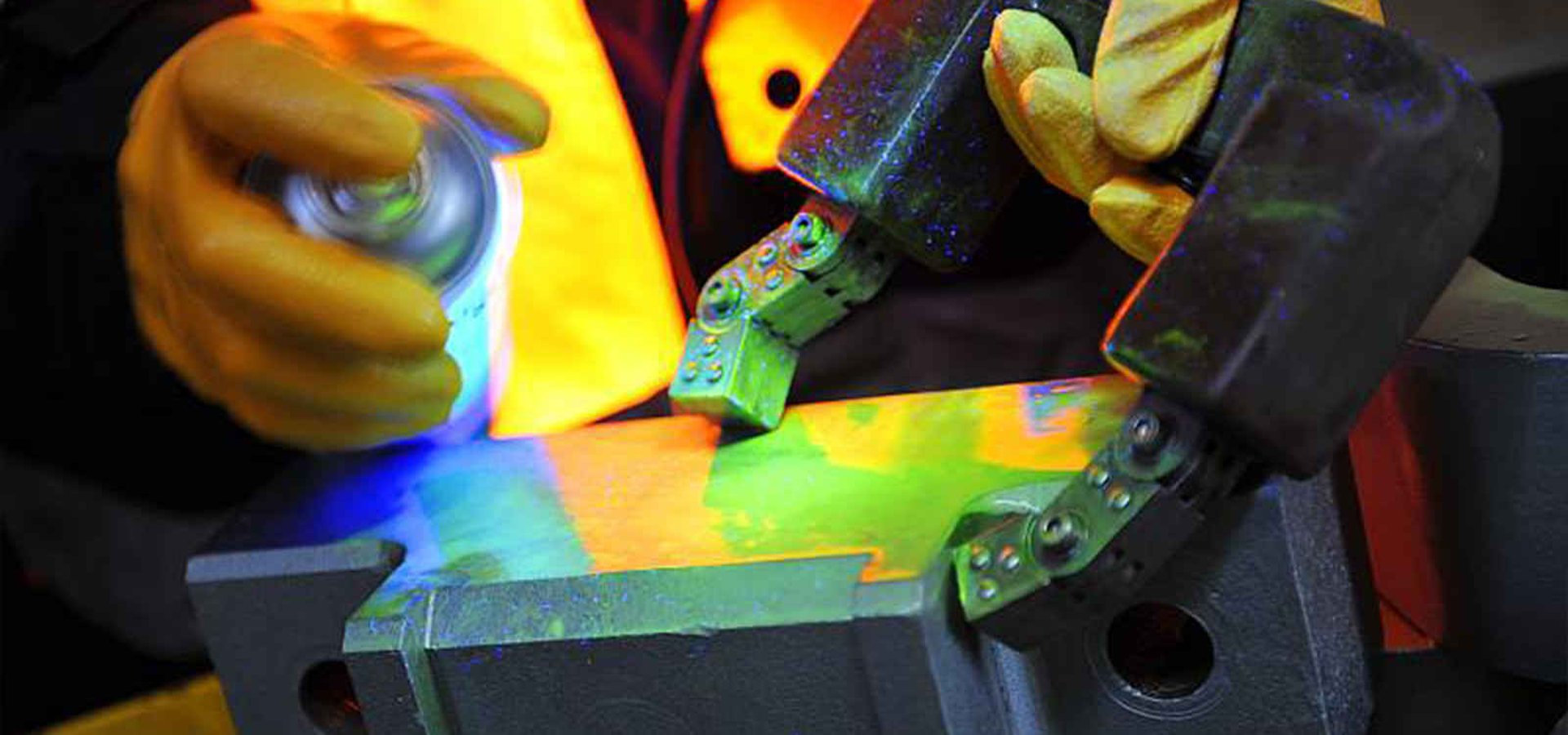
Accumulated magnetic particles form visible indications around cracks or discontinuities. Inspection may be performed under visible light or ultraviolet (UV) light when fluorescent particles are used.5. Evaluation
The indications are evaluated by a certified technician or engineer. The size, orientation, and severity of detected defects are assessed according to applicable standards.6. Cleaning and Reporting
After completion of the test, the surface is cleaned and demagnetized if required.
The results are documented in inspection reports or certification records.
Magnetic Particle Testing (MT) is a non-destructive testing (NDT) method used to detect surface and near-surface defects in ferromagnetic materials. In this method, the material is magnetized, and fine magnetic particles are applied to its surface. These particles accumulate around areas where magnetic flux leakage occurs, forming visible indications of defects.
Magnetic Particle Testing is widely used to identify surface cracks, seams, laps, and other discontinuities in ferromagnetic components and plays a critical role in quality assurance processes across various industries.
Contact
Confidence and expertise in quality control.
Address
İzmir/Konak
Yenigün mah.
1314 Sok. No:4-202
info@reformkalite.com
+90 546 229 45 34
© 2025. All rights reserved.