


Ultrasonic Testing
What is Ultrasonic Testing?
Ultrasonic testing is a non-destructive testing (NDT) method that uses high-frequency sound waves to examine the internal structure of a material and detect potential defects. This technique is widely used to identify cracks, voids, discontinuities, and other structural imperfections, particularly in metal, plastic, and composite materials.Ultrasonic testing plays a critical role in safety and quality control processes across automotive, aerospace, construction, and energy industries.
Preparation:
The material to be inspected is cleaned from dirt, oil, or other contaminants on the surface. This step is essential to obtain accurate results.
Depending on the material type and thickness, the appropriate ultrasonic test device and probe (frequency selection in MHz) are selected.
Equipment Setup:
The ultrasonic testing device is configured to transmit and receive high-frequency sound waves.
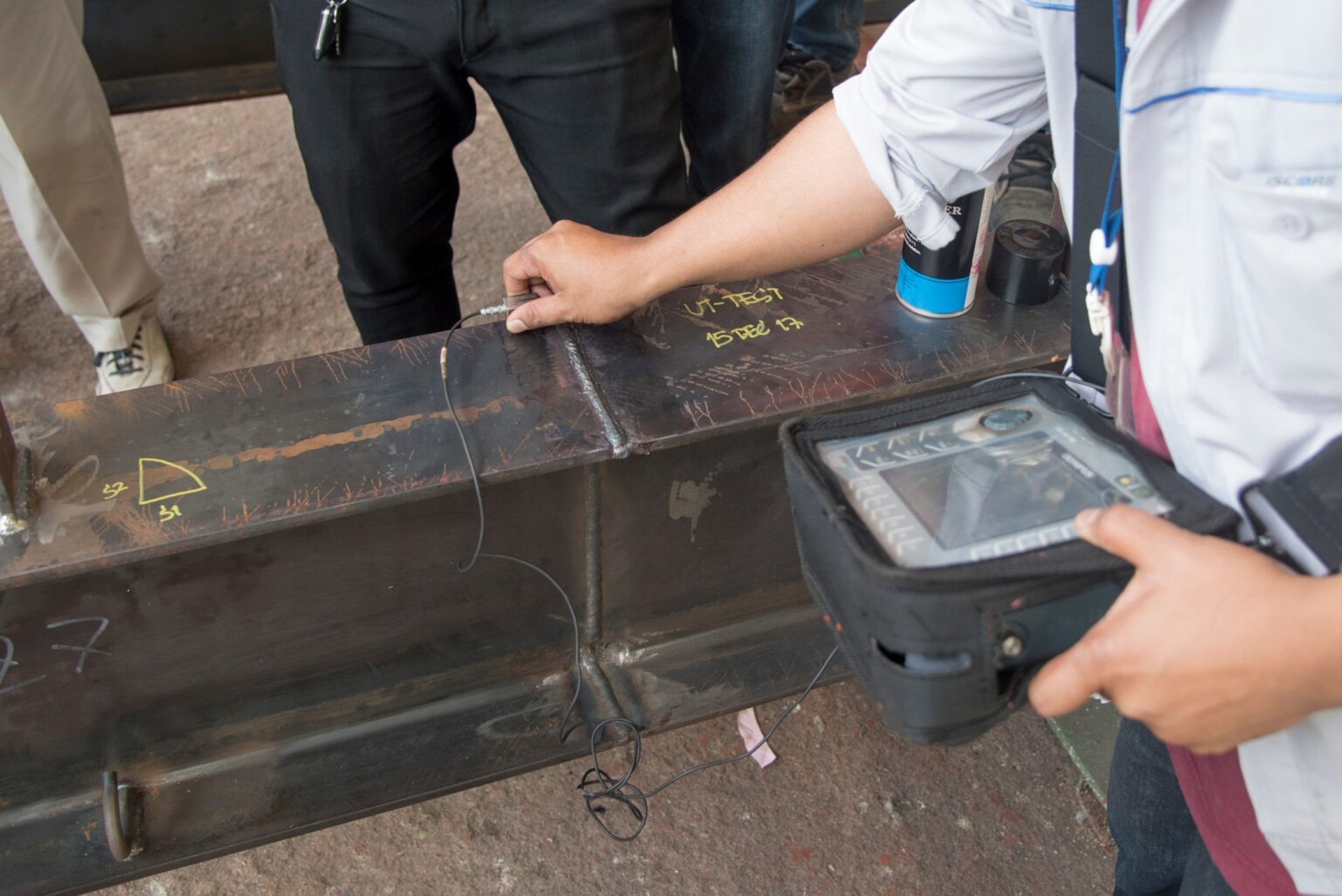
The probe is placed properly on the inspection surface to ensure effective transmission of sound waves into the material.
Couplant Application:
A couplant gel or liquid is applied between the probe and the material surface to improve sound wave transmission and prevent signal loss.
Transmission of Sound Waves:
The device sends high-frequency sound waves into the material through the probe. As the waves propagate, part of the signal reflects back when encountering a defect or discontinuity.
Analysis of Reflections:
The reflected signals are displayed on the test device screen. These signals allow evaluation of the internal structure and identification of potential defects such as cracks, voids, or inclusions.
Evaluation of Results:
The results are evaluated by a certified technician or engineer. The size, location, and severity of defects are assessed.
Findings are documented in inspection reports or certification records.
How is Ultrasonic Testing Performed?
Contact
Confidence and expertise in quality control.
Address
İzmir/Konak
Yenigün mah.
1314 Sok. No:4-202
info@reformkalite.com
+90 546 229 45 34
© 2025. All rights reserved.