



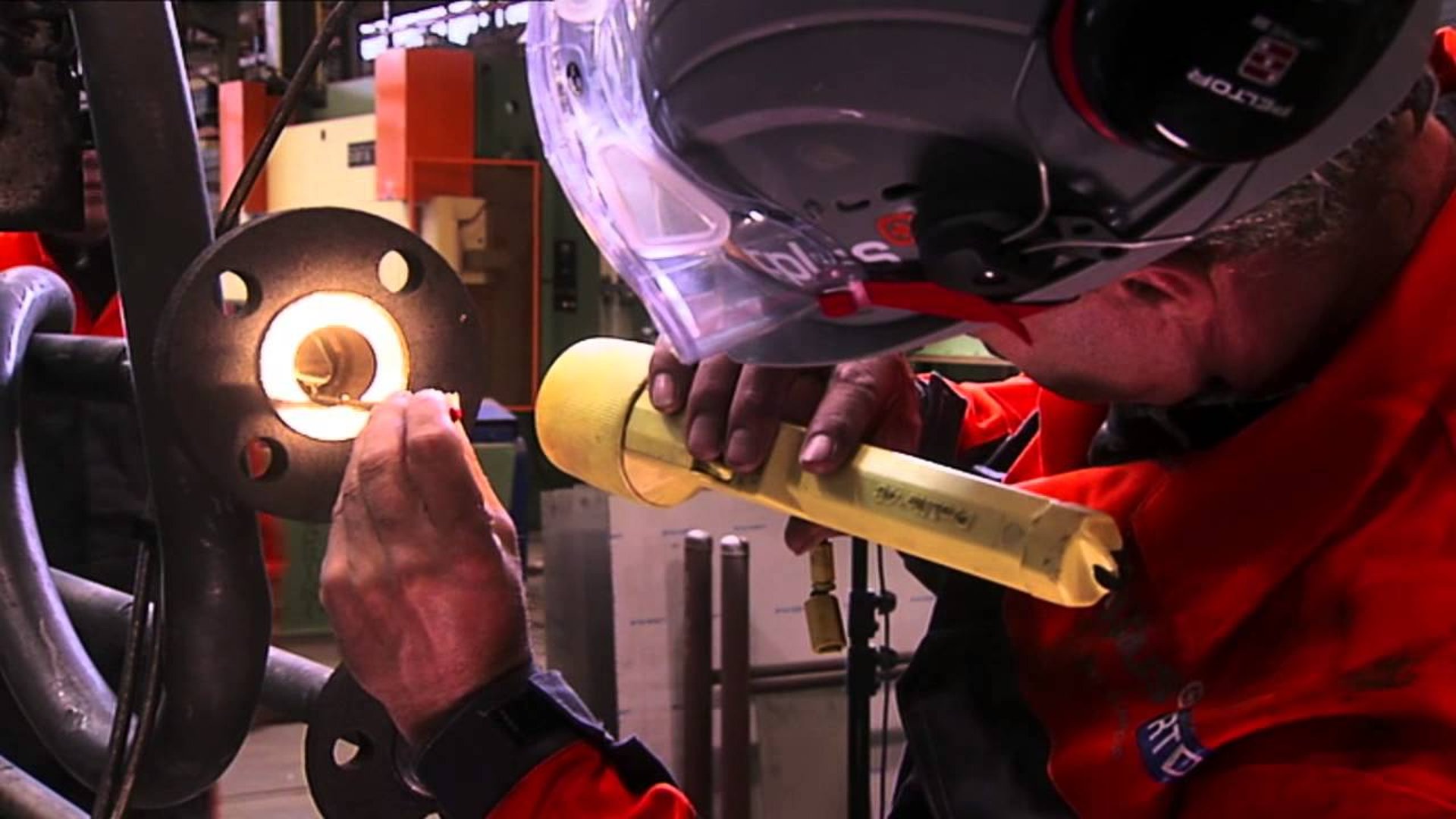
Pre-Insurance Non-Destructive Testing Services
PRE-INSURANCE NDT-BASED RISK ANALYSIS
Large industrial facilities (power plants, cement plants, petrochemical complexes) involve high capital intensity, complex processes, and significant loss potential.
Current practices show that pre-insurance risk assessments are often based on visual inspections and limited technical assumptions. This approach is insufficient to reveal internal defects in critical equipment operating under welding stress, high pressure, and elevated temperatures.
Our solution is to clearly define the technical, financial, and strategic value that NDT (Non-Destructive Testing) provides to insurance companies, reinsurers, and facility management prior to coverage.
Current Practice
Pre-insurance surveys typically include:
Visual inspection
Documentation review
General maintenance and operational observations
Structural and Technical Blind Spots
In large welded and pressure-bearing equipment:
Internal cracks
Fatigue damage
Corrosion mechanisms
Weld defects
Thermally induced weld discontinuities
These internal risks cannot be detected visually and are often only discovered after a loss event occurs.
Consequences
In the event of a claim:
Uncontrolled escalation of damage
Total equipment loss instead of localized repair
Business interruption
Exponential increase in insurance compensation
A Technical, Financial, and Reinsurance-Oriented Approach for Large Industrial Facilities
Problem Definition: Limitations of Conventional Pre-Insurance Risk Analysis
Critical Equipment and High-Risk Areas
Typical High-Risk Assets
Steam boilers
Pressure vessels
Rotary kilns in cement plants
Large-diameter gas and oil storage tanks
Reactors
Heat exchangers
Main process piping systems
Common Characteristics of These Assets
They contain high levels of stored energy
Damage can create a domino effect
A single defect can shut down the entire facility
What is NDT (Non-Destructive Testing) and What Does It Provide?
Definition of NDT
NDT consists of advanced inspection techniques that enable the detection of internal and surface defects in equipment without causing damage to the material, in accordance with international standards.
Commonly Used Methods (Examples)
Ultrasonic Testing (UT)
Radiographic Testing (RT)
Magnetic Particle Testing (MT)
Penetrant Testing (PT)
Phased Array Ultrasonic Testing (PAUT)
Time of Flight Diffraction (TOFD)
Pre-Insurance NDT-Based Preliminary Survey Model
What is the Core Logic of This Model?
While traditional survey methods are generally based on visual inspection, the NDT-based model enables in-depth technological examination without requiring physical intervention (breaking, dismantling, sampling).
Non-Destructive Examination: Internal defects are detected without damaging the structure or machinery.
Detection of Hidden Risks: Invisible corrosion, cracks, weld defects, or internal weaknesses in concrete are identified.
Accurate Premium Calculation: Insurers can price policies more fairly, as the true extent of risk is technically verified.
Loss Prevention: Potential failure or collapse risks are identified early, allowing corrective action before damage occurs.
Proposed Approach
During the pre-insurance phase:
Identification of critical equipment
Development of a risk-based NDT inspection plan
On-site application by certified personnel using calibrated equipment
Technical analysis and risk grading
Difference from Conventional Survey
Conventional Survey:
Visual and documentation-based evaluation
Qualitative, interpretation-based findings
Assumption-driven risk acceptance
NDT-Based Preliminary Survey:
Internal defect detection (cracks, corrosion, fatigue)
Measurable and reportable technical data
Evidence-based underwriting and reinsurance decisions
Added Value for Insurance Companies
Making Risk Measurable
Reduction of uncertainty
Strengthened underwriting decisions
Reduction in Loss Frequency and Severity
Prevention of major losses
Decrease in claim amounts
Reinsurance Perspective
More transparent risk profile
Lower reinsurance risk premium
Increased credibility with international reinsurers
Benefits for Facility Management
Technical Benefits
Early detection of hidden defects
Planned maintenance and repair
Prevention of unexpected shutdowns
Financial and Operational Benefits
Continuity of production
Reduced business interruption risk
Achieving an insurable risk level
The “Invisible Risk” Factor in Industrial Insurance
How Do NDT Reports Reduce Premiums?
In industrial facilities, traditional insurance assessment methods are often insufficient in complex and highly critical environments.
Although energy plants or cement factories may appear structurally sound from the outside, internal corrosion, micro-cracks or fatigue damage hidden within the material may exist without any visible signs.
Is It Optional or a Strategic Check-Up?
There is a long-standing practice in the insurance sector: waiting for damage to occur before evaluating it.
However, this approach is reactive.
A non-destructive testing (NDT) study, on the other hand, is a proactive strategic process — a technical “check-up.”
In critical assets such as pressure vessels, boilers and welded joints, potential defects that could lead to major losses can be identified before failure occurs.
Why Is NDT Becoming Essential for Insurance Companies?
1. Converting Blind Risk into Measurable Data
NDT transforms hidden risks — such as internal corrosion, fatigue or material degradation — into objective, measurable technical data.
2. Scientific Maximum Loss Estimation (PML)
Instead of speculative worst-case assumptions, insurers can rely on actual condition data to assess probable maximum loss.
3. Stronger Position in Reinsurance
Reinsurers value transparent, technically supported risk analysis.
NDT-backed underwriting builds confidence and improves pricing negotiation power.
Benefits for the Insured (Facility Owner)
Lower Premiums, Continuous Production
Facilities that conduct NDT assessments may be classified as “Improved Risk,” leading to stronger underwriting terms.
Premium Reduction
Scientifically measured lower risk directly supports more competitive pricing.
Managing Business Interruption Risk
NDT helps prevent unexpected shutdowns through condition-based maintenance planning.
Conclusion and Strategic Recommendation: The Era of Scientific Risk Management
Today, large industrial risks cannot be accurately assessed solely through visual inspection or documentation review.
NDT reports provide clarity and transparency for both insurers and insured parties.
Insurance-based NDT assessment:
✓ Establishes a new technical standard in industrial insurance
✓ Elevates large risk management to a scientific level
✓ Supports sustainability both technically and financially
Damage investigation is reactive.
NDT is preventive investment.
It is not a replacement for traditional inspection — it is an advanced engineering enhancement.
Content and Strategic Importance of the NDT Report
Report Content
List of inspected equipment
NDT methods applied
Classification of identified defects
Risk grading and prioritization
Recommended corrective actions and improvement measures
Use in Insurance and Audit Context
Technical annex document for the insurance file
Reference document during renewal periods
Technical basis and supporting evidence in case of loss
Win–Win Model
Insurance Company: More controlled risk, reduced claim exposure
Facility: Safer, sustainable and insurable operational structure
Reinsurer: More predictable portfolio performance
Contact
Confidence and expertise in quality control.
Address
İzmir/Konak
Yenigün mah.
1314 Sok. No:4-202
info@reformkalite.com
+90 546 229 45 34
© 2025. All rights reserved.