


Radiographic Testing
What is Radiographic Testing?
How is Radiographic Testing Performed?
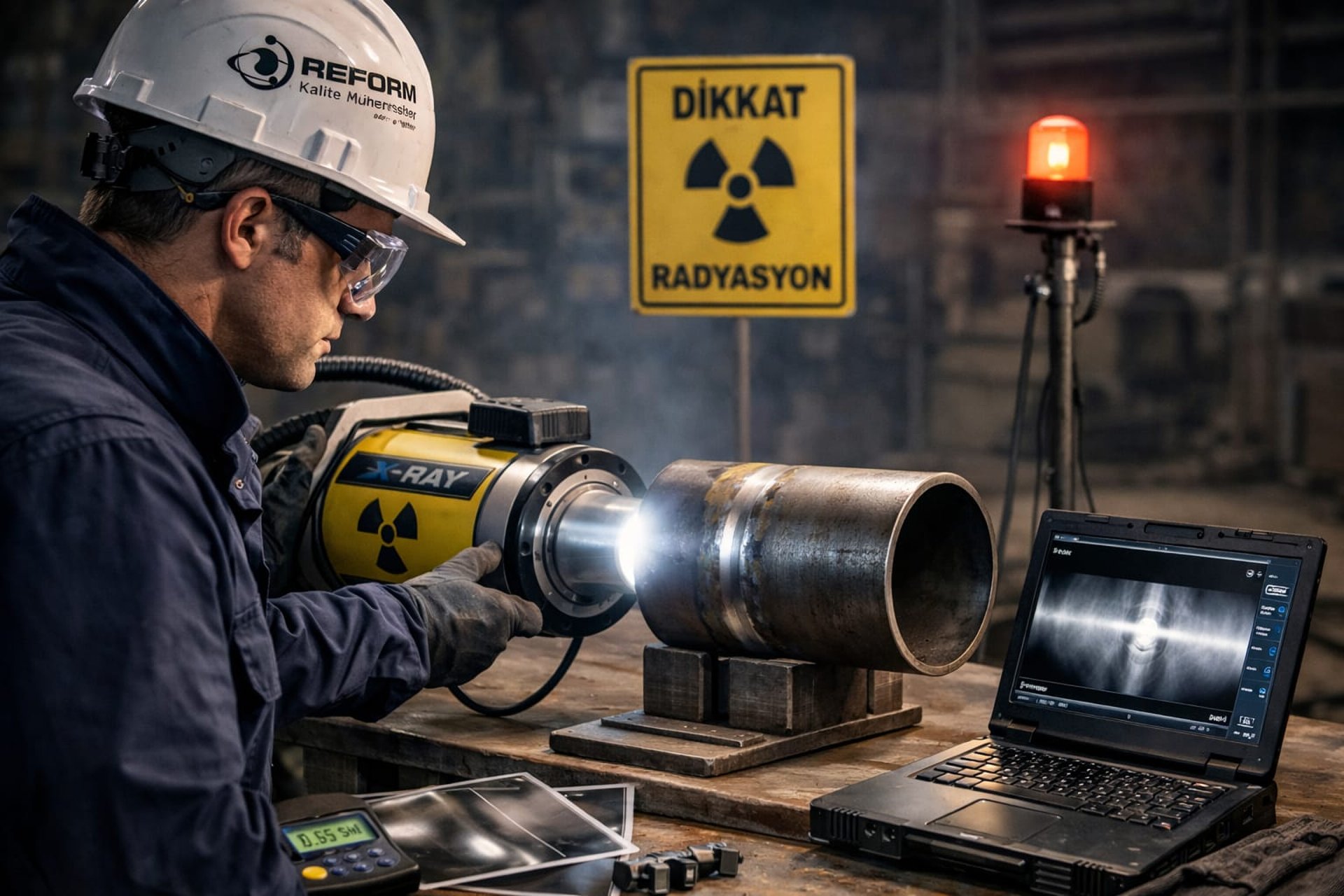
Radiographic testing (RT) is a non-destructive testing (NDT) method that uses X-rays or gamma rays to examine the internal structure of materials and detect possible defects. This technique is especially effective in identifying cracks, voids, inclusions, and other structural discontinuities in metals and other solid materials. Radiographic testing is widely used in safety and quality control processes across industries such as aerospace, automotive, construction, and energy.
Preparation
The test specimen or structure is prepared appropriately for inspection. Surface contaminants such as dirt, oil, or residues are cleaned.
Based on the material thickness and structure, appropriate radiographic parameters and film/detector selection are determined.2. Equipment Setup
The X-ray or gamma radiation source is positioned properly relative to the component being inspected.
Radiographic film or a digital detector is placed behind the material. The radiation passes through the material and enables visualization of its internal structure.3. Exposure
Radiation is applied to the material for a specific duration. The exposure time varies depending on material thickness and type.
During exposure, internal defects such as voids or cracks cause variations in radiation absorption, creating contrasts on the film or detector.4. Image Processing
After exposure, the radiographic film is developed or the digital image is processed.
The resulting image reveals the internal structure and potential defects within the material.5. Evaluation
Radiographic images are evaluated by a certified technician or engineer. Detected discontinuities such as cracks, porosity, or inclusions are assessed according to applicable standards.
The results are documented in inspection reports or certification records.
Contact
Confidence and expertise in quality control.
Address
İzmir/Konak
Yenigün mah.
1314 Sok. No:4-202
info@reformkalite.com
+90 546 229 45 34
© 2025. All rights reserved.